



The Monday After • Feb 2, 2026
Here We Are Alone Together.
 Darren Carlson
I've been thinking lately about how design shapes our experience of beauty—how the things we build quietly train us in what feels "normal," what feels satisfying, what feels worth wanting.
When my son was 14, he wrote his first worship song. The opening line was simple and haunting:
Here we are alone together.
Those words have been rolling around in my head for two years. Because it's not just a lyric. It's a diagnosis.
One of the most significant things the iPod (and then the iPhone) did wasn't merely to improve sound quality or make songs portable. It redesigned the social meaning of music. Before earbuds—and before that, really, the Walkman—music was mostly a shared and noisy experience. It was live shows. It was singing at church. It was living rooms with family, or parties with friends. Just take a quick look at The Lord of the Rings—everyone is singing about everything.
If you wanted music, you usually got it with other people, or at least in a public space. Someone else heard what you heard.
Now music is curated, private, and perfectly tailored: a personal soundtrack, sealed off from everyone around you. Two people can sit on the same couch and be in entirely different worlds. We are, in the most literal sense, alone together.
And once you notice that, it's hard not to wonder what it does to us—especially as Christians.
Consider the implications for worship.
Many of us have been trained for years to experience music as an individualized product. We choose the genre. We choose the mood. We skip what we don't like. We find the voice we prefer. We don't have to adjust. We don't have to wait. We don't have to submit our tastes to anyone else's. The "beautiful" song is the one that fits me.
And yet there's a reason people still crave live shows and live recordings. Something is different when you're part of a crowd—when the sound isn't perfect, when you can't control the setlist, when you're swept into something bigger than your own preferences. But even that longing can now be flattened into a solo experience: put on a VR headset and "attend" a concert by yourself.
Corporate worship is designed differently. It isn't meant to be a private listening experience. It isn't meant to be optimized for my preferences. The gathered church sings together—different ages, different backgrounds, different musical tastes, different levels of skill—and the point isn't that everyone gets their ideal soundtrack. The point is that we become one voice, one body, offering one confession of faith.
So why is it that many of us feel more engaged singing alone than with others?
Part of it is simply that we've been trained. We've been discipled by design. We've been shaped by a world where beauty is personalized, and where the highest good is choice, convenience, and control. Then we carry those instincts—without even realizing it—into the church.
In other words, design doesn't just shape what we do. It shapes what we love. It shapes what we expect. It shapes what we assume is "good," what we assume is "beautiful," and what we assume is "normal."
And that's why my son's line keeps echoing in my head:
Here we are alone together.
Because it captures something true about our moment—and it raises a question worth sitting with:
What would it look like for the church to recover a beauty that requires one another?

I know a former Brahmin, the highest caste in Hinduism, who converted to Christianity. He remembers hearing the church near his house singing as a child. As a young man, he would burn Bibles for heat and tear up tracts. He later secured a high-paying job but was eventually cheated by his partners and forced to relinquish nearly all his wealth. In despair, he called upon the Lord he once despised. Though his financial struggles continued, he found peace in his heart. He remembered the songs he had heard as a child and was converted. His wife also came to faith, but his family excommunicated him as a result.
The ministry he is now part of has a mission song that goes like this:
There should be no village without the Gospel. There should never be a village without a Church."
This and this is our ambition.
In trying to accomplish this aim, I will not be concerned about my life.
Through carrying the cross and enduring the suffering, I will keep marching forward – I will proclaim the Gospel.
I don't mind even being in hunger – but I will never leave the Lord's ministry. I am ready to bear the blame – but I will never abandon righteousness. I will keep marching forward – I will proclaim the Gospel."
The Gospel must reach every village, and the church must spread to every town. This is our Master's call.
Our Goal, our goal, our goal, Your Glory. Our Goal, our goal, our goal, Your praise.
As we go forth with Your Word, we are glad to risk our very lives. As we take up our cross, we gladly share our Master's shame.
We will advance Your glorious cause, we will proclaim Your Gospel truth. We may hunger, and we may thirst, but we will not abandon our Savior's call.
Others may mock, and others may jeer, but Christ Himself grants us His righteousness. We will advance Your glorious cause, we will proclaim Your Gospel truth.

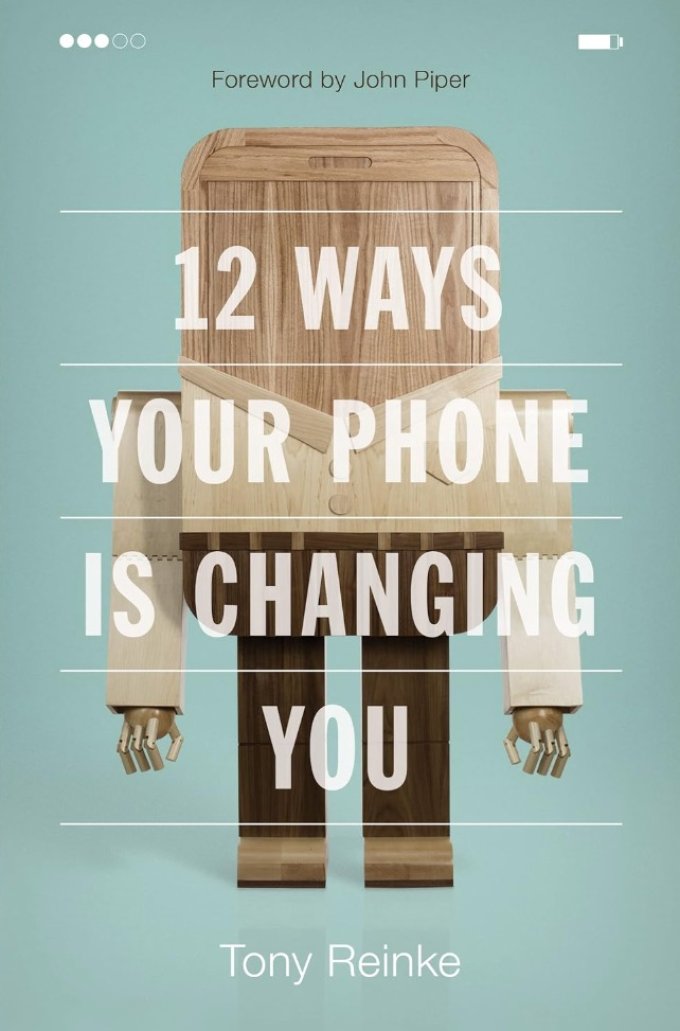
Speaking of how we are shaped by our phones …
Thanks for checking in.
Sign up here to receive Darren Carlson's The Monday After email. This weekly newsletter is designed to encourage your faith and share inspiring stories of what God is doing around the world. Each edition features a short devotional, a story that will give you a glimpse of His work in unexpected places, and a resource you might find helpful.
5.18.26On Knowing God
When people ask me, "What's the best argument for God?" my reply now is, "Best for whom?" A grieving parent is not comforted by the fine-tuning of the cosmos. People need different kinds of reasons: intellectual coherence, existential purpose, and emotional solace. Our picture of God is inevitably shaped by feelings […]
5.11.26Paul Didn’t Obey Christ Until the Church Laid Hands on Him
If you are going out for cross-cultural mission work — ask yourself: who is sending you? Have you paused to think about that at all? Your heart is right. You read Scripture, you see the call to go, your heart burns — all good. But none of us is our own […]
5.4.26A Goal of Frontier Missions is Domestic Ministry
3 John is a short letter. You can read the whole thing in about two minutes. The Apostle John is writing to his dear friend Gaius. He says he loves him "in the truth." It's a warm letter. John has received a kind of ministry update — some itinerant missionaries had […]
4.27.26Do You See People?
Nathan Clarkson opens his book Different with these words: I've always known I was different. It wasn't something I chose or an identity I one day decided to wear. Being different is woven into the very fabric of who I am. I know I'm different because when other children were content […]


