



The Monday After • Jan 5, 2026
On Making Resolutions
 Darren Carlson
Why do we make New Year's resolutions?
"This year I am going to ________." "This year I am going to be a better ________." "This year I will weigh ________." You've heard the lines, and you've probably filled in the blanks more than once.
And if we're being honest, most of us have also felt the quiet frustration that follows. There is something almost universally human about this season. For a brief moment, we look at ourselves with a little more clarity, we admit that something isn't quite right, and we begin to hope that if we can start fresh—if we can just try harder—then we can become the kind of people we imagine we ought to be.
In one sense, that impulse is not wrong. A new year creates a pause in the routine, a natural moment of reflection where we take stock of our lives and notice patterns we've ignored. We consider our habits, relationships, weaknesses, and the gap between who we are and who we want to be.
The problem isn't that we desire change; it's that we often aim our strongest resolve at our smallest problems. Many of our resolutions circle around food, exercise, weight, productivity, or some other area where we think improvement is measurable and within reach. And because we live by momentum, we tend to do strange little rituals at the edge of the new year—sneaking in a last "big meal" on December 31, telling ourselves we'll begin on Monday, bargaining with our future selves as though change is always just one more day away.
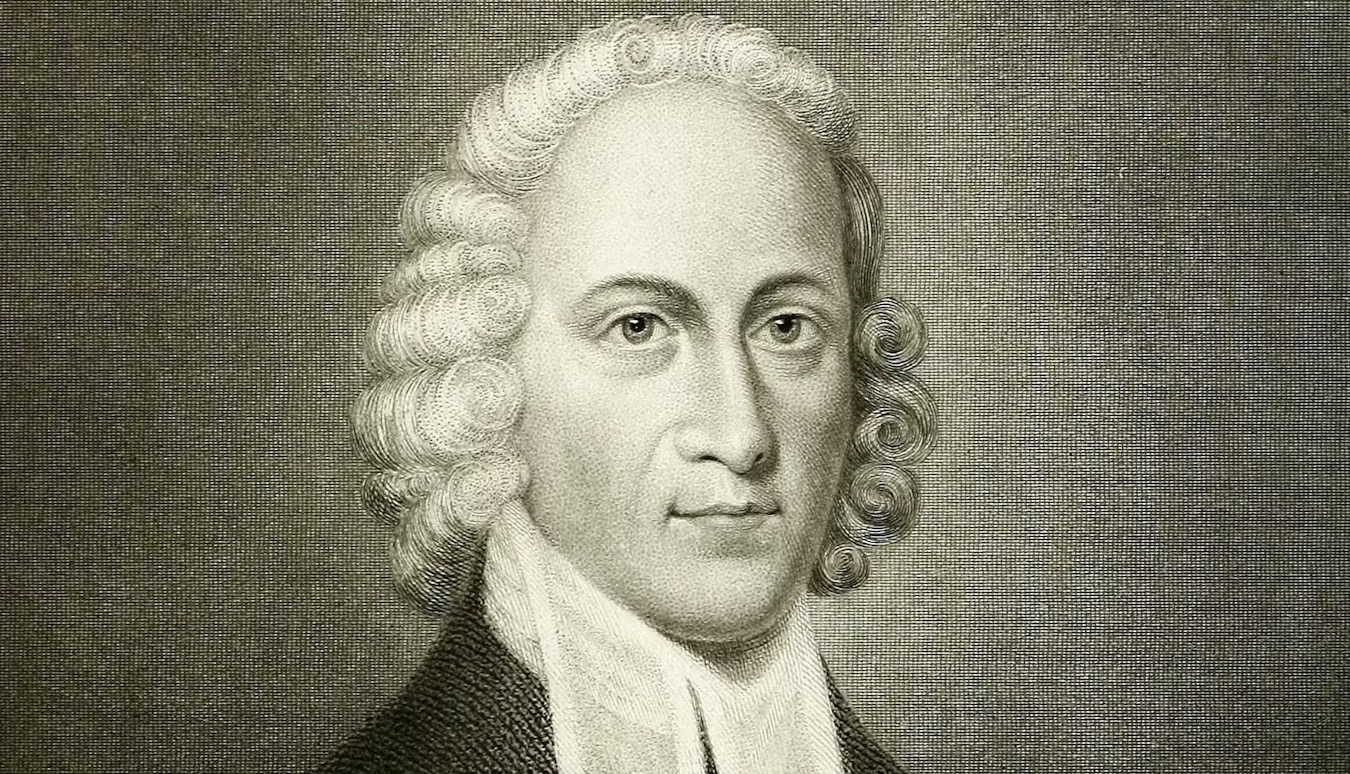
It can be sobering to read the resolutions of Christians who have gone before us, saints whose aims were not small and whose expectations of the Christian life were not trivial. Adoniram Judson wrote, "Endeavor to rejoice in every loss and suffering for Christ's sake, remembering that though, like death, they are not to be willfully incurred yet, like death, they are of great gain." Jonathan Edwards wrote, "Resolved, to strive every week to be brought higher in religion, and to a higher exercise of grace, than I was the week before."
Put those next to our usual self-improvement plans, and you can feel the contrast immediately. These men were not primarily trying to shed a few pounds or tidy up a few habits; they were laboring after joy in suffering, growth in grace, holiness that deepens week by week, and a life that increasingly looks like Christ. Their resolutions weren't about managing the surface of life but about surrendering life to God, and about becoming the kind of person who can endure hardship and still rejoice, who can suffer and still trust, who can be pressed and still praise.
So perhaps the issue isn't simply that our resolutions are too small, but that we don't know how to resolve in a distinctly Christian way. Many of our resolutions assume a kind of spiritual independence: if a resolution means "I will do this through sheer willpower," then we are setting ourselves up for a predictable cycle. We try, we falter, we feel guilty, and we quit; or we try, we succeed, and we become subtly proud—more confident in ourselves, more impressed with our discipline, more tempted to believe that the Christian life is just a matter of trying hard enough. Either way we lose. If you fail, you learn despair; if you succeed, you learn self-reliance. And neither despair nor self-reliance is Christian.
As a pastor, I have seen plenty of men and women tell themselves things like, "Now we are going to go to church." But the momentum is just not sustainable. They are bending their will with unchanged affections.
The way of Christ is different, and it is captured so clearly in the strange, beautiful logic of the apostle Paul. In 1 Corinthians 15:10 he writes, "But by the grace of God I am what I am, and his grace to me was not without effect. No, I worked harder than all of them—yet not I, but the grace of God that was with me."
Paul refuses a false choice that we often make. He refuses to choose between grace and effort. He says, in the same breath, "I worked harder," and "it was not I." The engine of his labor is not self-sufficiency but grace. He is not passive—he works, he strives, he plans, he presses on—but he does so as a man who knows that every ounce of strength, every enduring desire, every faithful step is supplied by God.
So, should we make resolutions? Yes, we should, because the opposite of resolution is not neutrality. The opposite is drifting. And no one drifts toward holiness while habits, fears, and distractions quietly make decisions for us. And whether we realize it or not, we are all living out resolutions already—some purposeful and stated, others passive and unstated. The question is not whether you will live by resolve; it's what will shape your resolve, what your resolve will aim at, and what power you will rely on to pursue it.
Maybe my invitation of the new year: not simply to try again, but to resolve differently. Not merely to upgrade your life, but to pursue Christ with a deeper seriousness than you have before, to aim at growth in grace that runs deeper than behavior modification, and to embrace a kind of effort that is both earnest and humble.
During a trip to teach in Nepal, I asked the pastors in my class to share about their ministries. One pastor explained that they had discovered a temple near their church that, on occasion, would perform human sacrifices. When he learned of it, he said he was shocked and burdened in his heart.
The Nepali pastor said the church began praying—sometimes even doing "Jericho prayer walking" around the temple itself. As a result, two of the temple priests became Christians. Now those same men were telling others they had been wrong, urging people to trust in Christ.
I remember just sitting there, dumbfounded by the whole thing.

Thanks for checking in.
Sign up here to receive Darren Carlson's The Monday After email. This weekly newsletter is designed to encourage your faith and share inspiring stories of what God is doing around the world. Each edition features a short devotional, a story that will give you a glimpse of His work in unexpected places, and a resource you might find helpful.
6.15.26Church in a Time of Illness
Well, this last week was terrible. I say that without hyperbole. There I was last Wednesday, minding my own business, when I walked into a downstairs bedroom that smelled like something had died, and found the carpet soaking wet. Then, for fun, twenty-four hours later I had a rare form of […]
6.8.26Plodding
On May 31, 1792, a thirty-one-year-old cobbler-turned-pastor stood before a gathering of Baptist ministers in Nottingham and preached what came to be called the Deathless Sermon. Taking his text from Isaiah 54, William Carey delivered the line that would echo through two centuries of evangelical missions: "Expect great things from God; […]
6.1.26Being Lonely at Church
Over the years, I've talked with a lot of people who left a church because they felt lonely there. No one talked to them. They felt like outsiders. They fell through the cracks. Sometimes that's true. Churches can be unwelcoming. People do get overlooked. I've seen it, and I've been part […]
5.18.26On Knowing God
When people ask me, "What's the best argument for God?" my reply now is, "Best for whom?" A grieving parent is not comforted by the fine-tuning of the cosmos. People need different kinds of reasons: intellectual coherence, existential purpose, and emotional solace. Our picture of God is inevitably shaped by feelings […]


