



The Monday After • Oct 13, 2025
Better Paths
 Darren Carlson
The longer I am in ministry, the more I appreciate all the work of Kevin Vanhoozer. Almost all issues I have faced at TLI and in pastoral ministry have been issues of hermeneutics, while the people I am talking to think the issues are related to inerrancy. The trouble is constantly helping unearth that how we approach the Bible is just as important as the words of the Bible. Here are nine ways people commonly misread the Bible.
1. As a Magic Book - Opening at random, hunting for omens, or assuming a chapter guarantees a good day treats Scripture like a charm rather than God's speech. The Bible is revelation, not talisman.
Better path: Read whole books in context. Ask: What did this mean for the first hearers? How does it reveal God and point to Christ (Luke 24:27)?
2. Alone — As if private insight were self-authenticating - Personal Bible reading is vital, but private impressions aren't infallible. The Spirit indwells the church (Eph 2:22), not just isolated individuals.
Better path: Submit your readings to your local church, to the communion of saints across time, and to tested teachers (Acts 17:11; Eph 4:11–16). Hold your conclusions with humble, revisable confidence.
3. To Prove It Wrong - Approaching with arms folded will not finally place Scripture in the dock; it places us there (John 12:48; Heb 4:12–13). You may find that while you scrutinize the text, the text scrutinizes you. You will lose if you do this. Maybe that is a good thing.
Better path: Doubt your doubts. Ask for intellectual honesty and moral openness (John 7:17).
4. Equating My Interpretation with the Bible Itself - "Our tribe's reading = God's meaning" confuses fallible conclusions with infallible revelation.
Better path: Distinguish the text from your take. Keep core doctrines firm and peripheries proportioned. Learn to say, "I think the text is saying..."
5. Proof-Texting Without Storyline - Cherry-picking verses divorces them from covenant, genre, and the Bible's sweeping plot from creation to new creation.
Better path: Read the whole story of the Bible. Learn how it fits together. Trace how promises and patterns land in Christ (2 Cor 1:20).
6. Moralism —Aesop's Fables with Bible Characters - "Be brave like David" or "Try harder like Daniel" makes Scripture a ladder to climb rather than a Savior to trust.
Better path: See how God's grace grounds godliness. The gospel creates the obedience it commands (Titus 2:11–14).
7. Prosperity or Pragmatism Lenses - Treating the Bible as techniques for success misreads blessing and suffering (Phil 1:29).
Better path: Seek conformity to Christ rather than control of circumstances (Rom 8:29).
8. The Cafeteria Approach - Cherishing comforting texts while ignoring difficult ones yields a god in our image.
Better path: Commit to the whole counsel of God (Acts 20:27). Read through books; don't just hopscotch favorite passages.
9. For Information Only - Amassing facts or word studies while dodging obedience breeds spiritual callouses (James 1:22–25). Don't be a Pharisee.
Better path: Aim for understanding unto worship unto obedience. Ask: What should I repent of, believe, rejoice in, and do?

Last January, a young man from our church moved to Washington for an internship. His parents had been faithfully praying that he would connect with other Christians there.
As part of his internship at a large company, he was assigned a mentor. During their first conversation, the young man mentioned he was from Bozeman. To his surprise, his mentor lit up and shared that his own son had attended Montana State, been involved with Cru, and even attended Redeemer!
The mentor then said, "I've been to Redeemer. If you're looking for a church similar to it, I have the perfect one for you here."
The story didn't end there. On Sunday morning, the young man's mom shared the connection with Cru staff she had met while sitting near them in Bozeman, and they immediately recognized the mentor's son. Even more amazingly, one of the staff members mentioned having a mentor who lived in the same area of Washington where the young man had moved. And yes, it was the student's dad!
That same Sunday, the mom began receiving texts from her son:
"Mom, they stand for the reading of Scripture like Redeemer."
"Mom, they're preaching through Revelation like Redeemer."
"Mom, this is crazy!"
What an incredible answer to prayer!

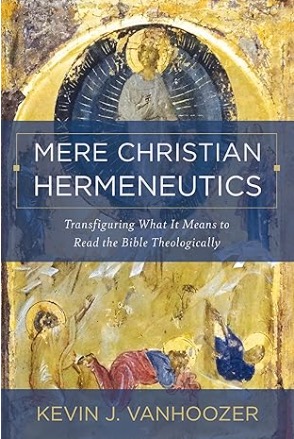
Speaking of Kevin Vanhoozer, check out Mere Christian Hermeneutics. This book is not easy reading, but it really helps you see your blind spots.
Thanks for checking in.
Sign up here to receive Darren Carlson's The Monday After email. This weekly newsletter is designed to encourage your faith and share inspiring stories of what God is doing around the world. Each edition features a short devotional, a story that will give you a glimpse of His work in unexpected places, and a resource you might find helpful.
6.15.26Church in a Time of Illness
Well, this last week was terrible. I say that without hyperbole. There I was last Wednesday, minding my own business, when I walked into a downstairs bedroom that smelled like something had died, and found the carpet soaking wet. Then, for fun, twenty-four hours later I had a rare form of […]
6.8.26Plodding
On May 31, 1792, a thirty-one-year-old cobbler-turned-pastor stood before a gathering of Baptist ministers in Nottingham and preached what came to be called the Deathless Sermon. Taking his text from Isaiah 54, William Carey delivered the line that would echo through two centuries of evangelical missions: "Expect great things from God; […]
6.1.26Being Lonely at Church
Over the years, I've talked with a lot of people who left a church because they felt lonely there. No one talked to them. They felt like outsiders. They fell through the cracks. Sometimes that's true. Churches can be unwelcoming. People do get overlooked. I've seen it, and I've been part […]
5.18.26On Knowing God
When people ask me, "What's the best argument for God?" my reply now is, "Best for whom?" A grieving parent is not comforted by the fine-tuning of the cosmos. People need different kinds of reasons: intellectual coherence, existential purpose, and emotional solace. Our picture of God is inevitably shaped by feelings […]


