



The Monday After • Sep 8, 2025
Embracing His Church
 Darren Carlson
One of the strongest threats within parts of evangelical faith is the subtle but pervasive belief that the church is the Pharisees of the gospels. Suspicion of authority often gets framed like this:
- The church/leadership/institution = the legalistic Pharisees
- Me = the authentic disciple who is simply walking with Jesus
At first glance, this may feel compelling. After all, Jesus did strongly rebuke the Pharisees. But this perspective distorts the reality of Christ's love for and commitment to His church. It ends up portraying Jesus as someone who is constantly criticizing the very institution He Himself established, purchased with His blood, and promised to build (Matt. 16:18; Acts 20:28; Eph. 5:25).
This suspicion usually grows out of real failures in the church—leaders who abuse authority, communities that elevate tradition over truth, or institutions that wound rather than heal. Those experiences make the comparison to the Pharisees understandable. And yet, for those in leadership, facing this framework can make the very act of shepherding feel unfaithful.
It can start to feel more spiritual—or more Christlike—to operate outside authority, to distance oneself from structure, to walk only with "Jesus and me."
But that quickly collapses into self-rule. When you step outside of Christ's body, you don't escape authority—you simply enthrone yourself as the authority. The equation then becomes:
- The church = Pharisees
- Me = my own shepherd, my own authority, my own interpreter of Scripture
I know this because I used to read Scripture through that lens. I found myself resonating with it. I even felt drawn to it. I constantly meet people who want to strengthen the church who are not really part of a church. I'm sure some of you know what I am talking about.
But here's the hard truth: ecclesiology is not Pharisaism. To love Christ is to love His bride. To reject the local church is to reject Christ. To follow the Shepherd is to belong to His flock. To embrace Jesus is to embrace the church He founded, not to pit Him against it.

This is a story from something that happened at Planet Fitness in Bozeman, MT, this week. A man was sitting down at a Lat pull-down machine. He had a walker beside him. By the way he moved, it was clear he lived with a physical disability. By the way he spoke, it was obvious he also carried a mental disability. And yet—this very man had just led the young man kneeling in front of him to Jesus.
At first, my friend only overheard bits of their conversation. and thought to himself, How incredible would it be if God used this man—someone the world might overlook—to bring a twenty-something to Himself?
One set later, he looked over again. Sure enough, he heard the words of a "repeat after me" prayer rising from their lips. The man with the walker was guiding the other, step by step, straight to the Savior.
The power of God was on display—not in strength, not in eloquence, not in what the world esteems—but in weakness, in brokenness, in the vessel no one expected.

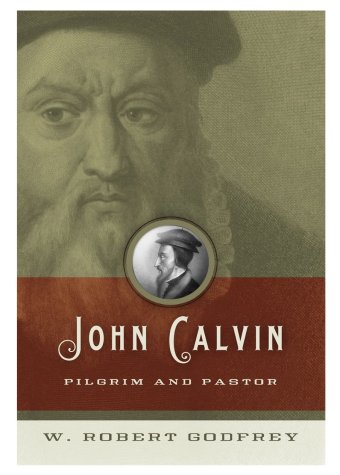
I was recently in Geneva, Switzerland, and was able to take a tour of John Calvin's church with Fabien De Lucia from Calvin Tours. You probably know the name John Calvin, but outside of maybe a caricature of his convictions, do you know much about him? If you would like a good intro, I recently enjoyed reading Robert Godfrey's introduction, John Calvin: Pilgrim and Pastor.
Thanks for checking in.
Sign up here to receive Darren Carlson's The Monday After email. This weekly newsletter is designed to encourage your faith and share inspiring stories of what God is doing around the world. Each edition features a short devotional, a story that will give you a glimpse of His work in unexpected places, and a resource you might find helpful.
6.15.26Church in a Time of Illness
Well, this last week was terrible. I say that without hyperbole. There I was last Wednesday, minding my own business, when I walked into a downstairs bedroom that smelled like something had died, and found the carpet soaking wet. Then, for fun, twenty-four hours later I had a rare form of […]
6.8.26Plodding
On May 31, 1792, a thirty-one-year-old cobbler-turned-pastor stood before a gathering of Baptist ministers in Nottingham and preached what came to be called the Deathless Sermon. Taking his text from Isaiah 54, William Carey delivered the line that would echo through two centuries of evangelical missions: "Expect great things from God; […]
6.1.26Being Lonely at Church
Over the years, I've talked with a lot of people who left a church because they felt lonely there. No one talked to them. They felt like outsiders. They fell through the cracks. Sometimes that's true. Churches can be unwelcoming. People do get overlooked. I've seen it, and I've been part […]
5.18.26On Knowing God
When people ask me, "What's the best argument for God?" my reply now is, "Best for whom?" A grieving parent is not comforted by the fine-tuning of the cosmos. People need different kinds of reasons: intellectual coherence, existential purpose, and emotional solace. Our picture of God is inevitably shaped by feelings […]


