



 Editors’
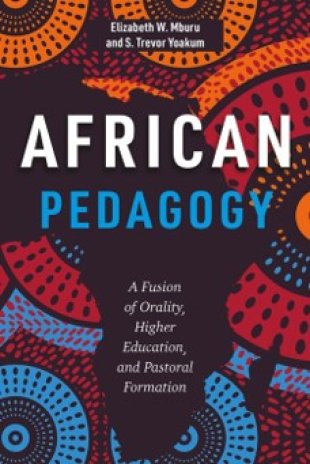
Note: A new book was recently released; a book the editors of JGC
knew we needed to highlight immediately. The book, African Pedagogy: A
Fusion of Orality, Higher Education, and Pastoral Formation (HippoBooks,
2026), is written by Elizabeth Mburu and Trevor Yoakum. We asked the authors to
introduce their book to our readers, summarizing its logic, content, and
benefit.
Editors’
Note: A new book was recently released; a book the editors of JGC
knew we needed to highlight immediately. The book, African Pedagogy: A
Fusion of Orality, Higher Education, and Pastoral Formation (HippoBooks,
2026), is written by Elizabeth Mburu and Trevor Yoakum. We asked the authors to
introduce their book to our readers, summarizing its logic, content, and
benefit.
Before we turn it over to them, allow us to introduce the authors and give you a brief glimpse of their years of relevant experience and training.
Dr. Mburu has a PhD in New Testament from Southeastern Baptist Theological Seminary (North Carolina). She currently serves as Associate Professor of New Testament and Greek at the Africa International University in Kenya, while also working tirelessly as the Langham Literature regional coordinator for Anglophone Africa.
Dr. Yoakum has a PhD in Pastoral Theology from Southern Baptist Theological Seminary (Kentucky), an EdD from Southwestern Baptist Theological Seminary (Texas), and a DMin from Midwestern Baptist Theological Seminary (Missouri). He is an associate fellow at the Kirby Laing Centre, an evangelical think tank in Cambridge, UK, and has over twenty years of experience as a missionary, theological educator, and consultant in the context of West Africa.
Drs. Mburu and Yoakum, please introduce us to your exciting and clearly important new book on pedagogy for higher education in African contexts.
1. Introduction
In African Pedagogy: A Fusion of Orality, Higher Education, and Pastoral Formation, we propose a pedagogy—a set of teaching strategies, techniques, and practices—designed broadly for adult learners across sub-Saharan Africa. We explain the rationale behind our pedagogy with a detailed learning theory and further explain the principles that undergird that theory with a broad description of our philosophy of education.
The work begins at the theoretical level. On this foundation, we then extrapolate beyond the theoretical by describing specific teaching practices that are the logical extensions of the theory we introduced. The latter part of the book ends with practical outcomes of our pedagogy, such as how to write a course syllabus or a lesson plan that follows our proposal. Our pedagogy influences even the selection of specific teaching strategies to accomplish the learning objectives in a lesson.
The result of this book, we hope, is a full-orbed pedagogy for educating African learners, specifically, and Majority World learners in general. The focus is specifically on sub-Saharan African contexts. That said, the learning theory indicates the potential for further development of pedagogies for the Majority World outside sub-Saharan Africa and even the African continent.
All this raises an important question: Why exactly are we offering this study for further consideration?
2. The Problem
Fortunately, education in Africa, generally, and African pastoral training specifically, have made significant advances over the last hundred years. Unfortunately, educational institutions rely upon pedagogies inherited from Europe and North America. The specialists who developed these pedagogies relied upon European and North American students as their test subjects as if they were the global norm. The result is a skewed understanding of educational practices that do not consider how members of the Majority World learn and assimilate information.
The deficiencies in pedagogy have led to negative outcomes in theological education and pastoral training. Too often, when newly minted pastors return to the villages they left to pursue higher education, they attempt to teach their congregations in the same way they themselves learned at these theological institutions. But the congregations, not conditioned by the Western models of learning, grow frustrated by their pastor’s foreign instruction style. Tragically, some pastors leave their churches feeling disillusioned. Some pursue advanced degrees in Western styles and perpetuate the practices that created the problem.
Sadly, many educators as well as mission agencies have erred in opposite extreme directions in response to this problem. On the one hand, many local African educators recognize the shortcomings of Western teaching approaches in African theological education but do not know how to adapt it. Therefore, they do not change and the process continues. African pastors receive the same Western instruction style that has been imported worldwide. But these globally recognized Western teaching practices come at the expense of local African concerns.
On the other hand, some international mission agencies recognize the shortcoming of importing Western teaching strategies in African institutions, only to suggest a cure that is worse than the disease. These mission agencies conclude that institutional theological education itself is the problem. They prefer to pursue nontraditional forms of pastoral training to the exclusion of everything else. The problem with that perspective is that due to its emphasis on local problems, African clergy are ill-equipped to engage global issues. The reactions are equally harmful at opposite extremes. One favors the global perspective at the expense of local concerns; the other favors local concerns at the expense of the global perspective.
3. The Solution: A Contextualized African Pedagogy
We propose an alternative that recognizes local concerns without ignoring global perspectives. Rather than dismissing formal institutional theological education, we instead suggest a contextualized African pedagogy. We call our recommended contextualized African pedagogy, “concrete relational.” It is “concrete” because it reflects the propensity for concrete thinking among African learners. It is “relational” because our pedagogical approach recognizes the highly relational tendencies among Africans in community and towards life in general.
One notable feature of concrete relational thinking is a preference for concrete as opposed to abstract thinking or hypothetical reasoning. A result of this concrete reason is thinking in wholes rather than in parts. And while Africans do exhibit “higher order” thinking, it is expressed concretely rather than as abstract propositions. This preference for the concrete, among other characteristics, suggests why sub-Saharan Africans exhibit reasoning that differs from that of people from, for example, Western contexts. But how does this translate into actual pedagogical strategies?
3.1 First Instructional Strategy: Narrative
Our concrete relational pedagogy recommends educational practices that respect this African style of reasoning and learning. The emphasis on concrete learning suggests the use of narrative as one educational strategy. Narrative involves a tale of specific individuals who follow a trajectory of engaging in a specific crisis, culminating in a climax, and ultimately achieving a resolution. Narrative is long recognized as a valid technique among educators.
One example of this is how I (Yoakum) used to teach a course in Church History at a seminary in Togo, West Africa. I shared important events in history with the class as an epic drama that slowly unfolded over the course of years. The students were mesmerized as I shared the dramatic events in the life of Martin Luther as he defended the doctrine of justification by grace through faith. They beamed with pride as I recounted in story-form the historical contributions of African theologians such as Tertullian, Athanasius, Origen, and Augustine. And they grew animated as I shared the important role of evangelicals such as William Wilberforce in the abolition of the slave trade.
3.2 Second Instructional Strategy: African Proverbs
Another teaching strategy we recommend is the use of African proverbs. In some more oral contexts (see §3.6 below), local proverbs help the community define their problems, produce moral judgements, and suggest possible solutions even more than stories. Concrete relational learners do practice higher order thinking, but they do not manifest contrafactual (i.e., hypothetical) reasoning in the form of abstract propositions as is common in many Western societies. Borrowing insights from missiologist Jay Moon, we recommend local African proverbs as tools to assist with higher order thinking in the classroom. These local proverbs help provide structure to the reasoning process.
In essence, African proverbs function similarly to logical syllogisms, except the characters mentioned in the African proverbs are metaphorical rather than propositional. Take, for example, one traditional Togolese proverb. The proverb reads, “The crab walks sideways, but it always finds its way home.” The message of the proverb is that, despite the crab’s apparent limitation, i.e., walking sideways, it still manages to reach its intended destination.
Now, imagine an instructor of theology teaching a lesson in systematic theology. For that day’s lesson, the instructor wishes to teach a doctrine by Martin Luther, simil iustus et peccator, or “simultaneously just and sinful.” The principle of this doctrine is that, while believers are declared righteous by God because of the salvific work of Jesus Christ, they still struggle with indwelling sin from the moment of conversion until either they die or Jesus returns, whichever comes first. The traditional West African proverb can offer some assistance. The teacher can introduce this proverb to the students, many of whom may be familiar with it. The instructor can then use the proverb metaphorically to make his point. Believers represent the crab. Like the crab, they “walk sideways,” or are impeded on their forward progression because of indwelling sin. Despite this hindrance, believers will always “find their way home” or “reach heaven,” precisely because God is ultimately effective, not their own tendencies.
Instructors may also utilize proverbs as more than mere metaphors. They can alter elements of the proverb in much the same way that people adjust the primary or secondary premise in a logical syllogism. Imagine the instructor of theology wishes to test his students’ powers of reasoning during the same lesson about simil iustus et peccator. He wants them to consider the case of a sincere believer who, unfortunately, commits a grievous sin, similar to King David. The instructor could ask the class, “What about believers who commit terrible sins? What if the crab encounters a very large obstacle, say a large rock on a sandy beach, along the path it intends to take on its way home? Is the crab forever lost?”
The students could respond by suggesting how simil iustus et peccator is still valid. The crab, some may suggest, could simply climb over the rock or walk around it. Traditional African proverbs are malleable. That is the point. The community may use them while discussing difficult topics or problems that they face. The community members can alter elements of the proverb to convey subtle nuances to their arguments. In this manner, African proverbs reveal an amazing flexibility in their use. Instructors should consider them as one more resource or tool that they may use when considering how to teach difficult abstract propositions to their African students.
3.3 Third Instructional Strategy: Role-Play
A third teaching strategy is the use of role-play. Role-play is another way to engage the propensity for concrete thinking common among African learners. It also reveals how education should be far more than information transfer. Instead, good education should encourage adaptability according to the exigencies of the moment. It should also invoke the cultivation of Christian values in the lives of the students.
For example, role-playing was an indispensable tool of one of the authors (Yoakum). In my course, “Great Religions and Cults,” I appeared in each class session dressed as a member of a certain religious group or a cult. I would engage the students in the personality and demeanor of whichever group my clothing represented. The students not only had to recall previous information they had learned about that religion or cult, they also had to reason carefully in debate with the instructor as to why that group’s teachings were contrary to Christian belief and practice. Furthermore, they had to consider how to engage the specific temperament and personality of each representative portrayed by the teacher. Role-play encouraged much more than mere memorization of a set of facts about a group of people’s beliefs. It required students to think about how to engage those with different beliefs and put it into practice.
3.4 Learning Theory: Multiple Cognitive Orientations (MCO)
Our pedagogical approach for sub-Saharan Africa is an extension of our proposed learning theory, “multiple cognitive orientations” (MCO), which recognizes that people from all cultures consider the same reality but rely upon the use of culturally embedded human reason (cognitive orientations) to understand and engage the world in which we live. While all human reason operates by the same principles, there are distinct differences in the application of human reason found throughout cultures.
We identify three distinct societal and therefore cultural patterns or axes of human reason. The three dominant axes of cognitive orientations include (1) conceptual, (2) psychical, and (3) concrete relational thinking. We describe the important facts about (1) conceptual and (2) psychical thinking, but we spend most of our time discussing (3) concrete relational thinking, the dominant expression found among sub-Saharan Africans. This tripartite learning theory explains the need for a pedagogy adapted for African learners in particular as well as the rest of the Majority World.
3.5 Philosophy of Education: Theodramatic Critical Realism
Our philosophy of education, “theodramatic critical realism,” represents the underlying principle for our learning theory. This philosophy of education combines the thought of systematic theologian, Kevin Vanhoozer with the critical realist philosophy of Roy Bhaskar.
Vanhoozer’s theological contribution explains how this educational philosophy represents a Christian worldview according to its first principles. Bhaskar’s critical realist philosophy further explains how we inhabit a stratified reality. What this means is explored in detail in our book. Suffice it to say that our explorations lend justification to the Christian belief in the supernatural, a unified theory of knowledge, and further details about how the same concrete reality may manifest differently in various locations. This dynamic view of reality explains why human cognition does not manifest uniformly. The diversity of human cognitive habits explains the existence of multiple cognitive orientations.
3.6 Fusion and Orality
Having explained our pedagogy, supporting learning theory, and philosophy of education, we defend how we can incorporate elements of traditional African instruction into a modern (though not necessarily Western) educational institutional setting. We cite the work of African educational specialist Assie-Lumumba, who introduced the notion of fusion. According to Assie-Lumumba, fusion represents a combination of the universal features of education with traditional African instructional practices. Fusion is a creative blend of both the universal and the particular for African learners.
The medium we suggest for enabling this creative fusion in African education is a field of study in communication theory known as orality. Orality is the study of how the dominant medium of communication in each culture will influence the way its members interpret and process information. Non-literate societies, for example, are dependent upon oral means of communication. This preference for oral communication reflects a dependence on the sense of sound. This phenomenon creates an entire ecology in how people process, analyze, and interpret the world around them. It impacts their ways of communicating information as well as how they think. Orality is a significant component in the concrete relational pedagogy.
We spend much of our time explaining how Christian missionaries and educators have relied upon orality in the past and the present day. We both appreciate and critique the contributions of the past, offering suggestions for how Christian educators should move forward. In summary, the insights from orality help explain how educators in sub-Saharan Africa may creatively fuse universal features of institutionalized education, such as the need for a library, administrative structures within institutional frameworks, and certain classroom features (i.e. adequate seating, lighting, etc.) with traditional African instructional practices. This section highlights the subtitle of our book: “A Fusion of Orality, Higher Education, and Pastoral Formation.”
4. Conclusion
Africa needs pastors and other leaders who have received a quality education. Thankfully, the level of training that church leaders in the African continent receive has improved significantly over the last hundred years. But educators must reconsider how instruction is done in our theological education institutions. Abandoning institutional training is not the solution. Neither is an unwillingness to change the status quo. Rather, Christian educators and theological instructors should adapt their pedagogy.
Our book explains why and how theological institutions should improve their teaching strategies. Our concrete relational pedagogy provides teaching methods to engage African students in their style of learning. Three different teaching strategies—narrative, the use of African proverbs, and role-play—demonstrate the concrete relational pedagogy in practice. This pedagogical approach represents one aspect of our learning theory, Multiple Cognitive Orientations (MCO), which is undergirded by our philosophy of education, theodramatic critical realism. Combined, these three contributions to pedagogy, supported by a learning theory informed by our educational philosophy, represent a sincere desire to serve the church of Jesus Christ with instruction that its pastors and other leaders need. May God use this resource to grow future generations of African pastors.


